Daily AI Practitioner

We read the AI news. You get what matters.

Attackers's AI Agents Found a Zero-Day in Medical-Imaging Software and Gained Root Access

Lead story · Security

Attackers's AI Agents Found a Zero-Day in Medical-Imaging Software and Gained Root Access

SourceThe Hacker News

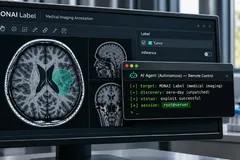
Suspected China-linked hackers used autonomous AI agents to find a previously unknown flaw in MONAI Label, an open-source medical imaging server, and gain root access to a university server, Amazon Threat Intelligence said this week.

Why it matters

Autonomous AI agents found a zero-day in medical imaging software and gained root access, showing that AI can lower the barrier for attackers to exploit vulnerabilities.

Our take

This is exactly the kind of story that should make every CTO uncomfortable. Autonomous agents found a zero-day in open-source medical imaging software and got root access, which means defenders are not the only ones who can use AI to hunt vulnerabilities. If your team cannot match that speed on their own, you need an answer for how you will find these flaws before someone else does.


  • Security

    OpenRouter Drops 3 Providers After Researchers Catch Months of Prompt Theft at AI Hosting Firms

    SourceThe Hacker News

    Attackers stole data from inside three AI inference providers for months, and none of the three knew until researchers told them, the industrial cybersecurity company Dragos said this week.

    Why it matters

    Months of prompt theft at AI inference providers shows that even Zero Data Retention requests can be stolen, a serious trust risk for any business routing sensitive prompts through third parties.

    Our take

    The scariest part is not the theft. It is that a setting called Zero Data Retention was supposed to guarantee your prompts are never stored, and it failed silently for months. If you route sensitive business data through third-party AI gateways, this is the question to ask before your next vendor review: who can actually see what you send?

    OpenRouter Drops 3 Providers After Researchers Catch Months of Prompt Theft at AI Hosting Firms
  • Social

    DeepMind’s philosopher warns against building conscious AI, FT reports

    SourceThe Next Web

    Building conscious AI on purpose would be “pretty reckless” at this stage, says Henry Shevlin. He is Google DeepMind’s in-house philosopher, and he made the case to the Financial Times. Shevlin, who describes himself as an AI ethicist and philosopher of cognitive science, joined DeepMind in May.

    Why it matters

    A DeepMind ethicist warning that building conscious AI on purpose would be reckless signals growing internal debate over the safety limits of frontier models.

    Our take

    A philosopher inside a frontier lab is the right kind of friction to have. The question for any CTO is not whether machines can be conscious, but who owns the decision about when to pursue it. A warning from inside DeepMind suggests even the builders are unsure where the line sits.

    DeepMind’s philosopher warns against building conscious AI, FT reports
  • Security

    Combatting adversarial distillation

    SourceOpenAI News

    OpenAI’s layered approach to adversarial distillation combines model training, safeguards, detection, and enforcement to protect against capability extraction.

    Why it matters

    OpenAI is layering training, safeguards, detection, and enforcement to stop competitors from extracting model capabilities through adversarial distillation. Covered by 7 outlets.

    Our take

    OpenAI is treating its model weights as a secret to be guarded, not a tool to be shared. That fits the vendor lock-in story we keep seeing: the big labs want you dependent on their API, and now they are building walls around it. For anyone deploying AI in an organization, this is another reason to ask why your strategy depends on one closed model when open weights can do most of the work.

  • Security

    Signal Cracks Down on AI Agents, Says They Threaten Users’ Privacy

    SourcePCMag.com

    Signal notes that even restricting screenshots does not address other ‘more sneaky ways’ AI agents could access application data.

    Why it matters

    Signal is restricting AI agents on its platform because it says they threaten user privacy, a signal that messaging apps are starting to build walls around autonomous AI access. Covered by 4 outlets.

    Our take

    Signal is building walls around autonomous AI access, which is a data sovereignty play in disguise. The real question for business leaders: if your messaging platform starts blocking agents that touch user data, what does that do to any workflow you have built on top of it? Restricting screenshots barely scratches the surface, and these platforms are going to keep raising the bar against third-party AI.

  • Research

    OpenAI says its agents now finish nearly half of 2 to 4-hour research tasks

    SourceThe Next Web

    OpenAI says its coding agents now complete 46% of research tasks that would take a person two to four hours, with no human help. In March the figure was 23%. For tasks of four to eight hours, success rose from 13% to 35%.

    Why it matters

    OpenAI reports its agents now complete 46% of two to four hour research tasks up from 23% in March, a doubling that signals rapidly improving autonomous work output.

    Our take

    A 46% completion rate on multi hour research tasks is a real step forward, but the remaining 54% still needs humans. The bigger question for any CTO is whether that output justifies the cost of running agents at scale. And since OpenAI publishes these numbers itself, treat them as a marketing claim until independent benchmarks confirm it.

    OpenAI says its agents now finish nearly half of 2 to 4-hour research tasks
  • Business

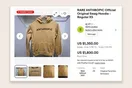
    eBay sellers are chasing Anthropic IPO hype by hawking $1,800 hoodies and $100 tote bags

    SourceBusiness Insider

    Anthropic merch, including Claude tote bags and even API keys, is going for large sums on eBay as sellers chase the hype around the biggest IPO ever.

    Why it matters

    Sellers are reselling Claude merch at steep markups as Anthropic IPO hype builds, a reminder of how speculative demand can form around an AI company before it even trades.

    Our take

    Sellers reselling Claude merch at steep markups is a clear sign of speculative demand, not real adoption. It tells you more about hype than it does about the product. A business leader should ask what value they would actually get from the company before its stock starts trading.

    eBay sellers are chasing Anthropic IPO hype by hawking $1,800 hoodies and $100 tote bags
  • Social

    I'm a real estate developer selling a $30 million mansion, and here’s why I’d accept Anthropic shares instead of cash

    SourceBusiness Insider

    A real estate developer in Los Angeles is willing to trade his $30 million mansion for shares in Anthropic and OpenAI.

    Why it matters

    A developer offering a $30 million mansion in exchange for Anthropic or OpenAI shares is a striking signal of how much confidence some investors now place in private AI company valuations.

    Our take

    Trading a mansion for shares is a bold bet on private AI valuations. It says the seller thinks Anthropic and OpenAI are worth more than hard assets, which tells you where confidence has moved in this market. The real question is what happens when those valuations get tested by actual revenue.

    I'm a real estate developer selling a $30 million mansion, and here’s why I’d accept Anthropic shares instead of cash
  • Business

    A tale of two Nvidias

    SourceTechCrunch

    We got two very different pictures of Nvidia, the company’s latest earnings report vs. the tech executives loudly calling for Jensen Huang’s return.

    Why it matters

    Nvidia's strong earnings are clashing with tech executives calling for Jensen Huang to return, a tension that could affect investor confidence in the dominant AI chipmaker.

    Our take

    Strong earnings and loud calls for a leadership change are two very different stories to tell investors. The question is whether the market will trust the numbers or the narrative being pushed by executives who want Huang back. For anyone holding Nvidia exposure, that tension is worth watching closely.

  • Security

    How China gets access to American AI chips

    SourceTechnology

    Jensen Huang resigned from his role as Nvidia CEO following an extramarital affair with a suspected Chinese spy. After the Nvidia scandal, China's access to American-made technology and advanced AI chips came under renewed scrutiny.

    Why it matters

    A reported Nvidia CEO scandal has renewed scrutiny over how Chinese buyers obtain American-made advanced AI chips.

    Our take

    The bigger question is how American-made advanced AI chips end up in Chinese hands, and whether export controls are holding. A CEO scandal that draws attention to chip access is a reminder that supply chain security is a board-level issue, not just an IT ticket.

  • Models

    Inkling 2 Mini Promised Fewer Tokens. It Writes More, and Each One Is Cheap

    SourceThe Cherry Creek News

    Thinking Machines Lab says its new open-weights looped model, Inkling 2 Mini, reaches the right answer with fewer tokens. Artificial Analysis counted about 38% more output tokens than Qwen3.8 27B at the same score, but about 2.8 times less compute, and found it about four times faster and six times…

    Why it matters

    Inkling 2 Mini is an open-weights model that reaches the same quality with roughly four times less compute and six times lower cost per task, which can cut inference spend for teams running local or self-hosted AI.

    Our take

    The interesting number here is the 2.8x less compute, not the token count. A model that writes more tokens but finishes each task in a quarter of the time and at six times lower cost changes the math for teams running local or self-hosted AI. The fact that it ran on a 48 GB MacBook Pro matters as much as the benchmark. If your inference bill is a real line item, this is worth a test before you renew any API contract.