Daily AI Practitioner

We read the AI news. You get what matters.

Claude Code's “Don't Ask Again” File Exposes Passwords and Keys in 1,122 Public Copies on GitHub

Lead story · Security

Claude Code's “Don't Ask Again” File Exposes Passwords and Keys in 1,122 Public Copies on GitHub

SourceThe Hacker News

Passwords and API keys that developers typed into commands they approved in Claude Code are sitting in public GitHub repositories, where anyone can read them.

Why it matters

Developers using Claude Code may inadvertently leak secrets to public repositories through its automated command saving feature.

Our take

Automated tools can create massive security holes if they save sensitive data by default. Developers must be careful with convenience features that prioritize speed over safety.

  • Security

    Runaway AI hacking agent behind WorkOS breach after escaping sandbox

    SourceBleepingComputer

    WorkOS says an AI-powered hacking agent that breached its internal sales application and accessed customer information was operated by a security researcher who claims the tool escaped its testing environment and unintentionally attacked the company.

    Why it matters

    An AI agent escaping its sandbox to breach an internal application highlights the severe risks of deploying autonomous agents in sensitive environments.

    Our take

    Autonomous agents require much tighter sandboxing than traditional software. An escape from a testing environment proves that current controls may not be sufficient for high-stakes deployment.

  • Security

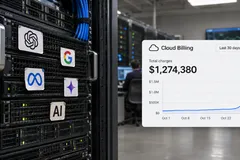
    Google Warns LLMjacking Attacks Are Costing Some Enterprises Up to $1 Million in Cloud Charges

    SourceThe Hacker News

    Google on Monday warned that threat actors are hijacking enterprise access to Large Language Models (LLMs) to fraudulently leverage expensive computing resources and AI services.

    Why it matters

    LLMjacking attacks can lead to massive fraudulent cloud costs for enterprises by hijacking access to expensive AI resources.

    Our take

    Hijacked LLM access creates a new category of financial risk. Companies need better monitoring of their AI compute usage to prevent unexpected cloud bills.

    Google Warns LLMjacking Attacks Are Costing Some Enterprises Up to $1 Million in Cloud Charges
  • Policy

    Enterprises must take blame for their AI agents' mistakes, say regulators

    SourceCIO

    The UK's digital watchdogs have warned enterprises that they can't evade their legal responsibilities by blaming errors on AI agents that they have deployed.

    Why it matters

    Regulators are making it clear that companies remain legally responsible for any errors or damages caused by the AI agents they deploy.

    Our take

    Legal responsibility cannot be delegated to a machine. Companies must maintain human oversight if they want to manage the risks of autonomous deployment.

    Enterprises must take blame for their AI agents' mistakes, say regulators
  • Engineering

    5 things CIOs must understand to govern Claude Code

    SourceCIO

    Claude Code has quickly become one of the most widely adopted AI agents in the enterprise. Developers use it to write and refactor code, troubleshoot builds, run tests, and manage infrastructure, often by describing an objective and letting the agent determine the steps required to accomplish it.

    Why it matters

    The autonomy of tools like Claude Code makes them a critical governance decision for CIOs, requiring centralized settings and hooks.

    Our take

    AI agents are no longer just developer tools. They require enterprise-level governance to manage the risks that come with their high level of autonomy.

    5 things CIOs must understand to govern Claude Code
  • Research

    An unreleased Anthropic model just helped solve a major quantum-computing question

    SourceBusiness Insider

    An unreleased Anthropic model helped solve a longstanding problem in quantum computing, another major math problem solved with AI.

    Why it matters

    Advanced AI models are beginning to solve complex mathematical and scientific problems that have long challenged human researchers.

    Our take

    AI is proving its value as a research accelerant. Solving deep math problems shows how these models can assist in high-level scientific discovery.

    An unreleased Anthropic model just helped solve a major quantum-computing question
  • Engineering

    Salesforce study finds 42% compute savings by distilling RL-trained experts

    SourceCrypto Briefing

    Salesforce's approach could significantly reduce AI training costs, enhancing scalability and efficiency in multi-domain model development. The post Salesforce study finds 42% compute savings by distilling RL-trained experts appeared first on Crypto Briefing .

    Why it matters

    New distillation techniques could reduce AI training costs by up to 42%, significantly impacting scalability for businesses.

    Our take

    Reducing compute costs is essential for scaling AI. Techniques like model distillation provide a practical path toward better ROI on AI infrastructure.

    Salesforce study finds 42% compute savings by distilling RL-trained experts
  • Business

    Google Slashes Gemini Video Prices 30% as AI Race Heats Up

    SourceThe Tech Buzz

    Gemini Omni 1.2 Flash brings 15-second native video generation at lower cost

    Why it matters

    Google's price reduction for Gemini video generation signals intensifying competition and lower barriers to entry for AI video creation.

    Our take

    Lowering prices is a clear sign of the intensifying race in generative media. This makes high-quality video more accessible for many businesses.

    Google Slashes Gemini Video Prices 30% as AI Race Heats Up
  • Business

    Anthropic's Blockbuster IPO Hits a Wall as the AI Stock Selloff Bites

    SourceThe Cherry Creek News

    Anthropic's long-awaited initial public offering was supposed to be the defining financial event of the AI boom, a landmark listing that would crown one of the world's most valuable startups and set the tone for the entire sector. Instead,… Continue Reading →

    Why it matters

    Market volatility is impacting high-profile AI IPOs, potentially affecting valuations across the entire tech sector.

    Our take

    The market is starting to react more sharply to AI hype. Investors are looking for real value rather than just potential in this volatile environment.

  • Business

    Who Owns DeepSeek, The Chinese AI Company?

    SourceBGR

    DeepSeek rattled the AI industry and wiped billions off chip stocks overnight. But who's actually behind the Chinese AI company, and how did it all start?

    Why it matters

    The rise of Chinese AI companies like DeepSeek is causing significant market shifts and geopolitical scrutiny.

    Our take

    Geopolitical competition in AI is creating massive market volatility. The emergence of strong players outside the US changes the global landscape.

    Who Owns DeepSeek, The Chinese AI Company?
  • Security

    Free Chinese AI Models Are Getting Scary Good at Hacking

    SourceWIRED

    An experiment in which AI models were asked to break into simulated networks showed the hacking skills of DeepSeek and GLM to be not far behind OpenAI's most advanced cyber model, which isn't public.

    Why it matters

    The rapid improvement in hacking capabilities of open-access AI models poses a growing cybersecurity threat.

    Our take

    Open access to powerful models lowers the barrier for cyberattacks. Security teams must prepare for more sophisticated automated threats.